Numeral System
We use numbers every day. The number system that we use is the Hindu-Arabic system. It is based on ten symbols called digits. They are
0, 1, 2, 3, 4, 5, 6, 7, 8, and 9.
They are also the ten smallest whole numbers. Any other whole number can be written using the ten digits and the idea of place values.
Using two or three digits, we can write the next nine hundre and ninety whole numbers:
10, 11, ..., 20, 21, ..., 98, 99, 100, 101, ..., 200, 201, ..., 998, 999
Very large whole numbers can be written with more digits. In June 2010, the estimated poulation of the Philippines was 94,013,200 people or ninety-four, thirteen thousand, two hundred people, in words. Here are the place values for the 8 digits of the number that represents the Philippine population.
| 9 - ten millions (10 000 000) |
| 4 - millions (1 000 000) |
| 0 - hundred thousands (100 000) |
| 1 - ten thousands (10 000) |
| 3 - thousands (1 000) |
| 2 - hundreds (100) |
| 0 - tens (10) |
| 0 - ones (1) |
Hence, 94,013,200
=(9 x 10,000,000) + (4 x 1,000,000) + (0 x 100,000) + (1 x 10,000) +
(3 x 1,000) + (2 x 100)
In the above illustration, we could see that the Hindu-Arabic numeration system is built on groups of 10, 10=10 x 1, 100=10 x 10, 1000=10 x 100, and so on.
Thus, the system is known as the base ten system or the decimal system.
Uses of Numbers
It is hard to live even for one day without using or thinking about numbers. Numbers are used on clocks, calendars, license plates, rulers, scales, and so on. The major uses of numbers are listed here.
- Numbers are used for counting
Examples:
Student sold 129 tickets to the school play.
The recent Philippine Statistics Authority Census counted 94,013,200 people. - Numbers are used for measuring
Examples:
Ivan swam the length of the pool in 34.5 seconds.
The package is 78 cm long and weighs 4.3 kg. - Numbers are used to show where something is in a reference system.
Situation Reference System The normal room temperature is 21 degree Celsius
David was born on June 22, 1997.
The time is 10:10 A.M.
Detroit is located at 42 degrees North and 83 degrees West
Celsius temperature scale
Calendar
Clock time
Earth's latitude and longitude system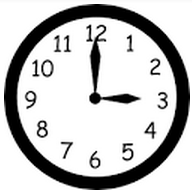
- Numbers are used to compare measure or counts.
Examples:
The cat weighs 1/2 as much as the dog.
There were four times as many boys and girls at the game. - Numbers can be used for identification and as codes.
Examples:
Phone number: (02) 555-1212
Zip code: 7000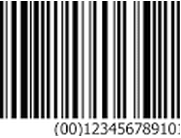
Bar code (to identify product and manufacturer): (00)12345678910
Kinds of Numbers
- Natural numbers are all positive numbers we use in counting.
These are 1, 2, 3, 4, 5, ...
- Whole numbers are all natural numbers and 0.
These are 0, 1, 2, 3, 4, ...
- Even numbers are whole numbers that are divisible by 2.
These are 0, 2, 3, 4, 6, ...
- Odd numbers are whole numbers that are not divisible by 2.
These are 1, 3, 5, 7, ...
- Prime numbers are natural numbers greater than 1 that are divisible only by 1 and itself.
These are 2, 3, 5, 7, 11, ...
- Composite numbers are natural numbers, which are divisible by 1 and itself, and are divisible by other natural numbers.
These are 4, 6, 8, 9, 10, ...
Four Basic Arithmetic Operations (+, -, x, /)
An operation in mathematics is something we do to numbers, such as adding, subtracting, multiplying, or dividing. For instance, in
13+41,
the operation of addition is performed on the numbers 13 and 41.
The following table shows the arithmetic operations.
Operation |
Addition |
Subtraction |
Multiplication |
Division |
Symbol |
+ |
- |
x |
/ |
| Result | Sum | Difference | Product | Quotient (and remainder) |
The following tables show some examples of the elementary mathematics operations, and terms that we use to describe them.
| Expression | 25+38=63 | 387-259=128 |
| Statement |
|
|
| Expression | 48x13=624 | 461/55=8 R21 |
| Statement |
|
Divide 461 by 55, the quotient is 8 and the remainder is 21. |
The Number Line
In mathematics, it is often useful to present whole numbers by points on a line called the number line
To illustrate a number line, draw a line. Choose any point on the line and label it 0. Starting with 0, mark off equal intervals of any suitable length. Label the points marked 1, 2, 3, 4, ..., then draw arrows on the extreme right and left. The arrows on the extreme right and left indicate that the list of numbers continues in the same way indefinitely.
A number on the number line is always grater than any number on to its left and smaller than any number to its right, that is, 4 > 3 and 4 < 5.
Properties of the Four Operations
There are four mathematical properties which involve addition and multiplication
Commutative Property
2+7 is the same as 7+2,
2x7 is the same as 7x2.
That is, the order in which the two numbers appear does not affect the answer.
MATH FOCUS
For any numbers a and b
|
Associative Property
In addition and multiplication, we can see that
(2+3)+4 = 2+(3+4),
(2x3)x4 = 2x(3x4).
That is, the way in which the three numbers are grouped does not affect the answer
MATH FOCUS
For any numbers a, b, and c,
|
Distributive Property
Mark: "There are altogether 3 rows of (5 + 3) books."
Joseph: "There are 3 rows of 5 books in the left shelf and 3 rows of 3 books in a right shelf."
Who do you think was correct?
Consider the following:
| 3 x (5 + 3)=3 x 8 =24 |
| and 3 x 5 + 3 x 3=15 + 9 =24 |
| Thus, we can see that 3 x (5 + 3)=3 x 5 + 3 x 3. |
MATH FOCUS
For any numbers a, b, and c,
|
Flexible Use of Distributive Property
The distributive property of multiplication over addition can also be extended to each of the following operations:
- Distributive Property of Multiplication over Subtraction
This property relates subttraction and multiplication, that is, the product of a number and a difference can be expressed as the product of the number and the minuend minus the product of the number and the subtrahend.
For example, (125 - 22) x 8=125 x 8 - 22 x 8.
- Distributive Property of Division over Addition
This property means that the dividend can be broken into parts to make calculation easier.
For example, 250 / 25=(175 + 75) / 25=175 / 25 + 25 / 25.
- Distributive Property of Division over Subtraction
Instead of addition, we just change it to subtraction.
For example, 150 / 25=(175 - 25) / 25=175 / 25 - 25 / 25.
Multiplication by Zero
It is useful to know that any number multiplied by 0 gives an answer of 0.
For example, 519 x 0=0.
That is, for any number a, a x 0=0.
Multiplication by powers of 10
A power of any number is either 1 or that number is multiplied by itself one or more times. We will discuss this idea in details in another section. Some of the powers of ten are 1, 10, 100, 1000, 10 000, and so on.
1
10
10 x 10=100
10 x 10 x 10=1,000
10 x 10 x 10 x 10=10,000
Multiplication by powers of 10 can be done mentally. The following examples illustrate an important pattern:
6 x 1=6
6 x 10=60
6 x 100=600
6 x 1,000=6,000
6 x 10,000=60,000
If one of two whole number factors is 1,000, the product will be the other factor with three zeros (000) written to its right. Two zeros (0) are written to the right of the factor when multiplying by 100, and one zero (0) is written when multiplying 10. Will multiplication by one million (1,000,000) result in writing six zeros to the right of the other factor? The answer is yes.
MATH FOCUS
|
Multiplication by powers of 10 The product of a number and a power of 10 is equal to the number and as many zeros to its right as power of 10. 10 is the number and 0 to its right; |
Shortcut Computation
Computation of large numbers with the use of pencil and paper can sometimes be tedious and difficult. In some cases, however by applying the properties of operations, computations could be simpler and shorter.
-
In adding whole numbers, group and mentally combine addends with total of 10, 100, or 1,000 using commutative or associative property of addition. - 137 + 98 + 863
- 78 + 456 + 122 + 44
- Since 137 and 863 makes 1,000 and with the use of Associative Property to the given expression, we have
137 + 98 + 863=(137 +863) + 98
=1,000 + 98=1,098
- From the given expression, 78 and 122 makes 200, 456 and 44 makes 500, hence
78 + 456 + 122 + 44=(78 + 122) + (456 + 44)
=200 + 500=700
-
Renaming the numbers - 56,997 + 3,488
- 29,748 - 379 - 621
- 7,834 - 6,398
- 10,000 - 3,297
- Braking 3,488 into 3 and 3,485, then the original expression 56,997 + 3,488 becomes
56,997 + (3 + 3,485)
(56,997 + 3) + 3,485
=57,000 + 3,485=60,485
- In a mathematical expression with two or more subtrahends, first observe if a combination of the subtrahends will result in 10, 100, or 1,000. Then continue with the computation of that given expression.
29,748 - 379 - 621
=29,748 - (379 + 621)
=29,748 - 1,000=28,748
- Since 6,398 and 2 makes 6,400, then the original expression is rewritten as
7,834 - 6,398
=(7,834 + 2) - (6,398 + 2)
=7,836 - 6,400=1,436
- Let us split 10,000 into 9,999 and 1 in the given expression, then we have
10,000 - 3,297
=(9,999 + 1) - 3,297
=9,999 - 3,297 + 1
6,702 + 1=6,703
-
In multiplication, the product can be easily and quickly determined if we look for factors whose product is power of 10. - 25 x 7 x 125 x 4 x 8
- 125 x 27 x 16 x 5
- Since the product of 25 and 4 is 100; 125 and 8 is 1,000, then
25 x 7 x 125 x 4 x 8
=25 x 7 x 4 x 125 x 8 -- Commutative Property
=25 x 4 x 7 x (125 x 8) -- Commutative and Associative Properties
=(25 x 4) x 7 x 1,000=700,000 -- Associative Property
=100 x 7 x 1,000=700,000
125 x 27 x 16 x 5
=125 x 27 x (8 x 2) x 5 -- Since 16=18 x 2
=125 x 27 x 8 x (2 x 5) -- Associative Property
=(125 x 8) x 27 x 10 -- Commutative and Associative Properties
=1,000 x 27 x 10=270,000
-
Application of Distributive Property - 187 x 51 + 187 x 49
- (25 + 125) x 4
- 782 / 17 - 442 / 17
187 x 51 + 187 x 49
=1b7 x (51 + 49) -- Distributive Property
=187 x 100 -- 51 and 49 makes 100.
=18,700
(25 + 125) x 4
=25 x 4 + 125 x 4 -- Distributive Property
=100 + 500=600
782 / 17 - 442 / 17
=(782 - 442) / 17 -- Distributive Property
=340 / 17=20
Example
Find the sum:
Solution:
Examples
Find the answer:
Solution:
We note that: 5 x 2=10; 25 x 4=100; 125 x 8=1000
Examples
Find the product:
Solution:
Examples
Evaluate each expression.
Solution: